 January 20, 2026
If you’ve ever thought “I should have known better” after a scam attempt, please don’t.
We support hundreds of home users and small businesses across London and the UK, and smart, cautious people fall for scams every single week.
Scammers aren’t relying on stupidity. They rely on pressure, timing, and fear.
Here are the 7 most common scams we see hitting our clients right now — and exactly how to spot them:
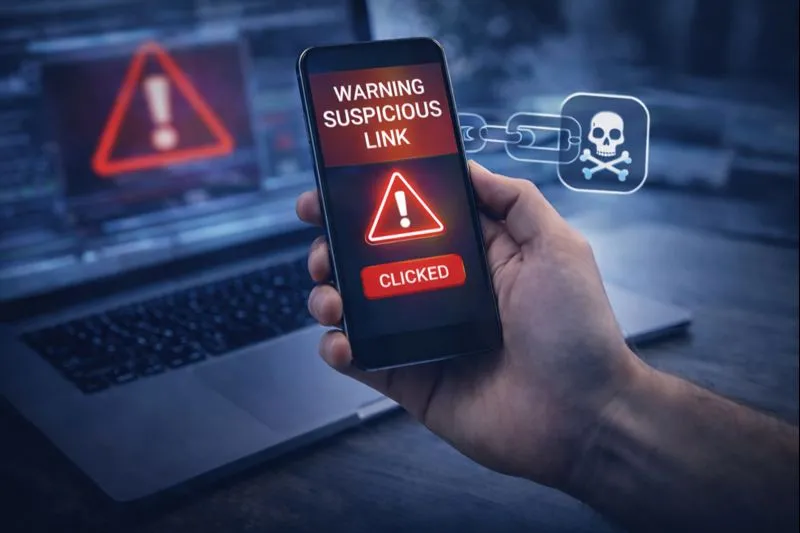
“Your Account Has Been Compromised” Emails
These usually claim to be from:
- Microsoft
- Apple
- Your email provider
- A delivery company
They’ll say something like: “Unusual activity detected. Action required within 24 hours.”
Common Red flags:
- Urgent language
- A link asking you to “secure your account”
- Slightly odd email addresses
What to do instead:
- Do not click the link
- Always scan check/ email if unsure in detail
- Go directly to the company’s website yourself
If unsure, stop and ask, a friend or call Geeks on Wheels London on 0203 051 797. Even 10 minutes can prevent days of damage and loss of earnings.
Fake Microsoft or “IT Support” Phone Calls
These calls often sound professional and convincing: “We’ve detected suspicious activity on your computer.”
They may ask you to:
- Install remote access software
- Read out codes
- Confirm passwords
Red flags:
- Legitimate companies like Microsoft and Google or you bank do not cold call about security.
- Pressure to act immediately
What to do instead:
- Hang up
- Never allow remote access unless you requested support.
- Call Geeks on Wheels London on 0203 051 7977
One-Click Delivery & SMS Scams
Texts like: “Your parcel couldn’t be delivered. Click here.”
They work because people are genuinely expecting deliveries.
Red flags:
- Shortened links
- No personal details
- Generic wording
- Emails that look genuine, name or domain name spelt incorrectly
What to do instead:
- Don’t tap the link
- Check directly with the courier via their official app or site.
Fake Invoices & Payment Requests
Often targeted at small businesses and sole traders: Looks like a normal supplier invoice. Bank details quietly changed.
Red flags:
- Sudden urgency
- “Updated bank details” without a phone confirmation
What to do instead:
- Always verify bank detail changes verbally
- Visit your bank personally
- Pause payments if anything feels off
“You’ve Been Hacked” Pop-Ups
Your browser suddenly freezes and claims: “Your computer is infected. Call this number immediately.” These are fake, but very effective.
Red flags:
- Loud warnings
- A phone number on the screen
- Phone number on screen
- Caller calls multiple times from different numbers
- Locked browser behaviour
What to do instead:
- Force-close the browser
- Restart the device
- Call a trusted IT provider, not the number shown
- Geeks on Wheels London 0203 051 7977
Social Media Account Takeovers
Common signs:
- Password reset emails you didn’t request
- Messages sent from your account that you didn’t write
Red flags:
- Weak or reused passwords
- No multi-factor authentication (MFA / 2FA)
What to do instead:
- Change passwords immediately
- Enable MFA / 2FA everywhere possible
- Act fast, delays make recovery harder
“It Was Too Embarrassing to Ask” Scams
This is the most damaging one, doing nothing because you’re worried you’ll look foolish.
Please know this:
- We would much rather check a false alarm than clean up a preventable breach.
- If You’re Unsure – Pause First
Scams rely on urgency. Real IT support relies on calm, clear steps. If something doesn’t feel right:
- Stop
- Don’t click
- Don’t reply
- Ask someone you trust
- Call Geeks on Wheels Remote IT support: 0203 051 7977
How We Help
At Geeks on Wheels London Ltd, we deal with these situations daily, often after someone has already been caught out. Early intervention makes a huge difference.
If you’d like:
- Reassurance that something is safe
- Help checking a suspicious message
- Advice on protecting your devices properly
- We’re always happy to help, no judgement, no pressure.
- Call us now for free advice: 0203 051 7977
- Geeks on Wheels London, members of Which Trusted Traders.